Ginger Root Extract and BreathiZen™
Ginger is the warming root of Zingiber officinale, a kitchen favorite across Asia and far beyond.
In brief
- Root (rhizome) of Zingiber officinale
- Native to Southeast Asia
- Gingerol gives the warm bite
- One of three named plants
What it is
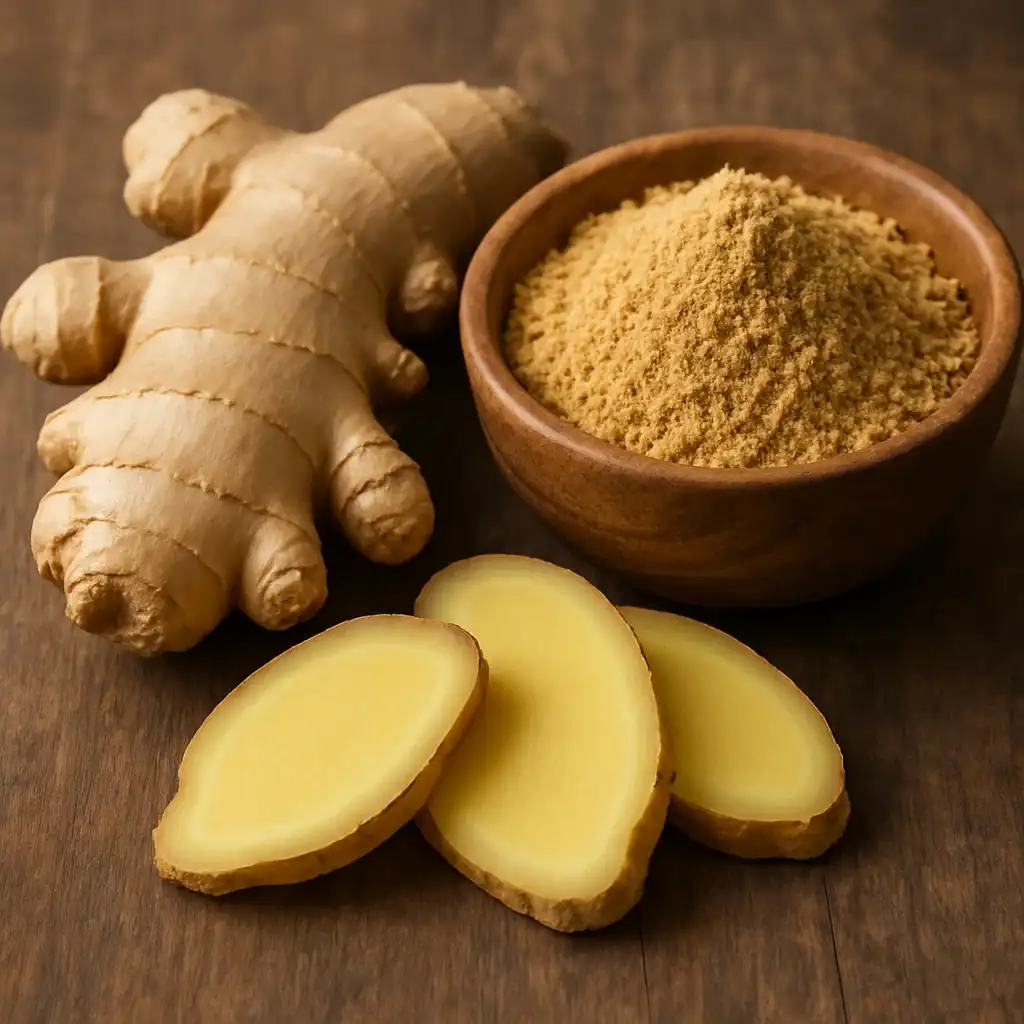
Ginger looks like a knobby tan root, but the part we eat is actually an underground stem called a rhizome. When you cut it, the flesh is pale yellow with a sharp, spicy smell. The warm bite comes from natural compounds such as gingerol. People have cooked with ginger, steeped it as tea and candied it as a treat for thousands of years. Ginger ale, gingerbread and ginger tea are all familiar examples.
Where it comes from
Ginger grows best in warm, humid climates. India and China are among the largest growers today, and it started in Southeast Asia. Growers dig up the rhizomes after about eight to ten months, then wash, slice and dry them. Makers can then process the root into an extract.
Why it is in BreathiZen
BreathiZen lists ginger root extract second in its 154 mg blend.* Your BreathiZen bottle label shows the serving size and the full Supplement Facts panel. Ginger: The Warming Root in the Blend tells more.
Worth knowing
- An underground stem, not a true root
- Gingerol gives the spicy warmth
- A kitchen staple for thousands of years
- Second plant in the BreathiZen blend
Easy ways to explore it
- Read Ginger: The Warming Root in the Blend
- Slice fresh ginger into hot water for a simple tea
- Open the NCCIH ginger page in the sources below
Keeps company with
Ginger pairs well with these guides:
Public sources
Common questions
Is ginger a root?
The part we use is a rhizome, an underground stem, though people call it a root.
What gives ginger its warmth?
Natural compounds such as gingerol.
Where can I see the amounts?
Check the Supplement Facts panel on your bottle label. It lists the 154 mg blend per serving of 4 sprays.
No question matches that word. Try another word or contact us.